
For those of you that know me, I doubt you'll find it surprising that, when asked to describe an example of a contemporary rake, the "fashionable or stylish [men] of dissolute or promiscuous habits" (Special thanks to the OED for this superb definition of a rake) that first came to mind were those from previous centuries. (Oh, the woes of those whose minds dwell on days of yore...) Though I was able to come up with an example of a modern-day rake, I thought it a shame to not mention the other "antiquated" examples I had come up with. Thus, I've decided to dedicate this blog entry to briefly analyzing the progression of the image of the rake since the 18th century.
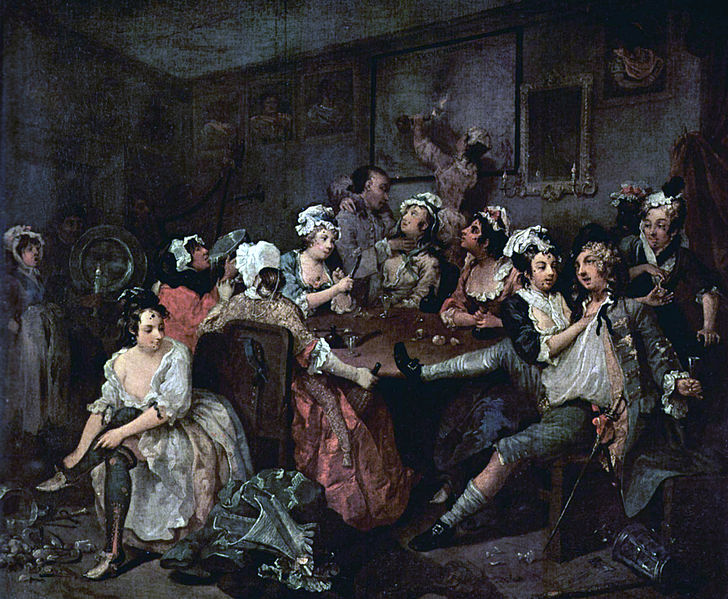
I feel it's only fair for me to begin with a discussion of one of William Hogarth's series of paintings, The Rake's Progress, seeing as this work was the inspiration for my blog title. For those of you that are unfamiliar with Hogarth, he was an 18th century English painter, who, among other things, was well-known for satiric depiction of the aristocracy. In The Rake's Progress, Hogarth tells the story of a man who inherits his father's fortune and uses it to fund a superfluous and ostentatious lifestyle, which, of course, included habits of a promiscuous nature. The rake's reckless ways eventually cause him to end up in Bedlam, a mental institution in London. The image I've provide below is the third painting in the series, "The Orgy." Eh-hem... I'm assuming there's no explanation needed here...
 Moving right along... George Gordon Byron, a.k.a. Lord Byron, also seems to fit the OED's definition of a rake. Byron was an English Romantic poet, whose "reputation" extend beyond things of a literary nature (One of his most famous poems is "She Walks in Beauty, which you can read here: http://www.bartleby.com/101/600.html.). Because of his poetic prowess and handsome appearance, he was often an object of sexual desire for many women of his day--the 19th century Clive Owen, if you will. With a vast array of women at his beckon call, it's no wonder he led such a lewd lifestyle. (However, considering Byron's notoriously pleasure-seeking personality, it's likely that he would have found other ways to appease his sexual appetite had there been a lack of willing women.) Below is a picture of Lord Byron... quite the Don Juan if you ask me. (Ironically enough, the term "Don Juan," among other things, refers to a semi-autobiographical poem written by Byron, which tells the story of a sexually promiscuous male.)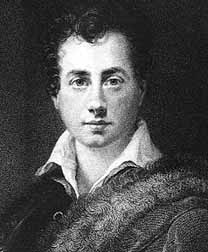
The next rake on my list is also from the 19th century. However, unlike the above rakes, he is a fictional character from the 1939 film, Gone With The Wind, adapted from the novel by Margaret Mitchell. His name is Rhett Butler. For those of you that haven't seen this movie (By the way... you SHOULD! It's EXCELLENT! Definitely one of my favorites.), Rhett is exceptionally wealthy, but has "the most terrible reputation," to quote a gossiping woman from the film. Although throughout the course of the movie, Rhett is wooing (or at least attempting to woo) one woman, the heroine, Scarlett, he frequents the local house of ill-repute where his good "friend" Belle Watling is the "madam." Here's a funny video clip from YouTube that contains many of the scenes from the film in which Rhett exhibits sexually promiscuous behavior. The song "Tough Lover" is playing in the background: how appropriate.
At long last, we arrive at the present day: The contemporary rake is... drum roll please... Joey from the film 10 Things I Hate About You. Joey, like our other rakes, is wealthy, takes pride in his appearance, and, of course, harbors a wanton lust for a fleshy love; he's a horny high-school boy, who, to use a colloquialism, "gets around." Like some of the rakes from the readings, Joey takes pride in "conquering the virtuous." His object of desire, Bianca Stratford, is not only one of the most beautiful, popular girls in school, but a virgin. Here's the movie trailer, in which Joey makes a brief cameo with Bianca at the tail end of the clip.
The character of the rake doesn't seem to have changed much over the course of the 18th, 19th, and 20th/21st centuries. All harbor similar personality traits, and certainly fit the description of the seducers Early-American advice texts urged women to be on the watch for. Though they may appear mannerly and suave, their ultimate goal is to fornicate with females.

4 comments:
I love the pictures! I just discovered how to add pictures in my last post too! I really liked the variety of “rakes” you discuss in your post. I found your pictures and video clips very engaging and interesting. I had completely forgotten about Joey in 10 Things I Hate About You (a movie I LOVE!). I also agree that the rake hasn’t changed much over the year, which is kind of sad for all those susceptible women out there. Hopefully if the rakes haven’t changed, the women have at least gotten more aware of them. I doubt this though. Sometimes its hard to see a rake before he’s coming! Great post.
Great examples of the rake evolving, or not evolving, over the centuries. I actually had a hard time coming up with "contemporary" rakes myself at first. It does seem like attitudes have remained more or less the same--if anything, I think it's MORE permissible for men to engage in rakish behavior than it was back in the good ol' days. Also, congratulations on your technological achievements! Clearly your blogging skills are evolving as well. The same cannot be said for mine.
Emily, I love your blog. Rhett Butler? Seriously? I love it. He IS a rake. All these years I wondered why I thought he was such a scumbucket, but I did not hear anyone else mention his promiscuous behavior. All I ever heard was Scarlett's sensibility! Sounds familiar doesn't it? That was such a great video.
Thank you for the history lesson on the "rake". Some things never change.
I also loved the 10 Things I Hate About You. I have not seen this movie, but I think I must now.
Emily, I love the pictures and videos--so glad you got them to work!
I also like the approach you took to this blog entry. By providing various depictions of the rake--real and fictional--you showed that he hasn't really evolved over time. Who would have thought that Lord Byron and Joey had so much in common? I wouldn't have thought of Rhett Butler, but I definitely agree. You mention that he tries throughout the movie to woo one woman, although he has constant access to the house of ill repute. Based on our readings, that's definitely a characteristic of the rake--"wanton" women get boring, so he needs a challenging conquest every now and then. Otherwise, what would he have to brag about?
Post a Comment